Chapter 4 : She was in her late thirties, thin, quick, in a gray suit that made her look like she'd been in court all morning, which she had. She listened to me for eleven minutes without interrupting, and when I finished she said, "Give me the thumb
Story: She Shamed Me for a Junkyard Yard — My Doorbell Cam Caught Who Really Dumped It
I gave her the thumb drive. She put it in her laptop and watched the clip twice, then paused it on the profile of the man in the green cap and leaned in.
"Do you know who this is?"
"Dave Whitfield. Brenda's brother."
"The president of the HOA's brother." She wrote something on a legal pad. "And this camera — you said your wife installed it."
"Two years ago. Package thefts."
"Did she ever tell you why she wanted a camera specifically on the porch?"
I thought about it. Adaeze had said something about packages, and something about "peace of mind," and there had been a night in 2022 when a man had walked up our driveway at eleven and stood looking at the house for four minutes before leaving, and Adaeze had stood at the window watching him with her hand on the phone, and after that she'd bought the camera the next day.
I told Alice that.
"Okay," Alice said. She wrote something else. Then she looked up. "Before I tell you what I think you should do, I want to tell you what you're up against. The county recording statute gives the HOA a lot of room. The fine is two hundred a day and it's a lien if you don't pay. That part is real. Second: the tow order on the truck is enforceable under the nuisance clause — a vehicle that hasn't moved in months on a visible lot can be classified as abandoned, and the HOA can authorize a private tow. That means Friday at six p.m., a wrecker can legally roll onto your property and take your wife's truck, and your only remedy afterward is to sue them."
"For the truck."
"For the truck. Which they would've already damaged." She set her pen down. "So. Tonight, we send a preservation letter to the board, the management company, and A-1 Towing, saying there's evidence of a manufactured violation and any towing or further assessment from this point will be treated as part of a fraudulent scheme. That letter doesn't stop the tow. What it does is lock them into what they do next. Then Friday at six, if a wrecker shows up, we don't argue with the driver. We let him hook the truck, we photograph the whole thing, and we call the county sheriff and file a stolen-property report."
"It's not stolen."
"It's not. But the sheriff's report will list A-1 Towing as the entity that took it, and a copy of that report goes to the county code enforcement supervisor Friday night. That's how the county actually opens a file on this. Not with a complaint. With a report."
I sat back.
"You've done this before," I said.
"I've done this on the other side," she said. "I used to represent HOAs. Then I watched one of them do this to a woman in her seventies over a fence she never built, and I switched sides." She shrugged. "I'm not going to pretend I'm a saint. I'm going to tell you the strategy that works."
She picked her pen back up.
"One more thing. Do you want to sue?"
I thought about it. I had a retirement and a pension and no kids and no reason to sue anybody except that Brenda Whitfield had stood in a room of my neighbors and made me the neighborhood's problem.
"I want the fine gone," I said. "I want the order gone. I want the truck in my driveway. And I want people to know what happened."
"Then you don't sue," Alice said. "You give them the chance to correct the record themselves, in the room, in front of the neighbors. If they don't take it, then we file." She wrote a number on her pad and tore the page off and slid it across the table. "That's my cell. If anything happens with the tow, call me before you do anything else."
I folded the page into my wallet.
On my way out I stopped at the bagel shop and bought a cup of coffee I didn't want, because the walk back to the car felt like it needed punctuation.
That night, at 6:40, while I was heating up a can of soup, my phone buzzed on the counter.
Brenda.
I stood in the kitchen looking at the lit screen with the can in one hand and the spoon in the other for a full ten seconds before I picked up.
"Frank."
"Brenda."
There was a pause on the line like an empty hallway. When she spoke again, her voice was different from the clubhouse. It was quieter, and it was moving carefully, like a woman who was used to being in charge and was trying to figure out how to sound sympathetic without sounding weak.
"I heard a rumor you have something on your porch camera," she said.
"You heard that from Marcus."
"I heard it." Another pause. "Frank. I want to make sure you understand what you'd be doing if you went after me. The board authorizes nuisance fines. The board can also authorize an emergency assessment. If you and I end up in front of a judge, I'm going to be sitting in a room with my brother and my ledger and every neighbor who has ever heard that truck of yours run at seven a.m. on a Sunday, and you're going to be a man who let his lawn go for two weeks and then went after the volunteer who tried to help him."
"Volunteer," I said.
"I'm not the one who made your yard look like that, Frank."
I stood in the kitchen with the soup going cold on the stove, and I thought about Adaeze's voice in January, and I thought about the pale-yellow cut on the branch that was sitting on the floor next to the trash.
"Okay, Brenda," I said. "Have a good night."
"Frank—"
I hung up.
I did not sleep that night. I want to say that honestly because it's true. I sat in the living room with the TV off from 11:15 until about 3:00 in the morning, listening to the rain and the house, and at some point around 1:30 I made a decision, and I want to be honest about this too: it wasn't a smart decision. It was an angry one.
I decided I was not going to call Alice or Norma or the county. I decided I was going to do this the way a man with a piece of paper does it — in front of the room, without a lawyer's letter, so that every person sitting in the folding chairs would have to be in the room when it happened.
I wrote a note on the yellow pad and I folded it and I put it in my jacket pocket, and in the morning I called the board secretary and asked to be put on the agenda for the next meeting, which was already scheduled for the following Tuesday.
"I'll need to know the subject," Carol Hoyt said.
The subject, I said, looking at my lawn through the kitchen window, was a correction to the minutes.
Advertisement
All 8 chapters
- 1Brenda Whitfield's palm came down flat on the printed photograph, and the sound cracked through the clubhouse like a gavel. The photo was eight by ten, glossy, and brutal: my front lawn at seven in the morning, two weeks ago. Cut branches
- 2"Frank," he said. "Hey. Frank."
- 3The next morning, at 7:40, I took the SD card out of the camera, put the files on a thumb drive, put the thumb drive in a Ziploc bag, and put the Ziploc bag in the pocket of my jacket next to my wallet. I considered what else I might need
- 4She was in her late thirties, thin, quick, in a gray suit that made her look like she'd been in court all morning, which she had. She listened to me for eleven minutes without interrupting, and when I finished she said, "Give me the thumb
- 5"I heard what you told Brenda at the end of the meeting." Ruth is fifty-two and works as a legal assistant at a firm downtown and has been treasurer of the HOA for four years, and she is not a bad person, which is the whole problem with t
- 6The room had changed since the last meeting. That was the first thing I noticed. Same clubhouse, same U-shaped tables, same cookie tray, same harsh light. But the folding chairs were fuller — twenty-three, by my count, more than the last
- 7I met Alice Pham at the code enforcement office at 8:30 with the thumb drive and a printed copy of Ruth's scanned ledger pages and a two-page typed statement I had written the night before in the kitchen, and a code officer named Reggie P
- 8The county's nuisance investigation closed in December, and I have the letter in a file in my kitchen in a manila folder next to Adaeze's tax records. It says, in two paragraphs of dense legal prose, that the code enforcement division fou
You may also like

My Uncle Slapped Me at the Country Club and Called Me a Thief — But I Was Already Holding the Chit He Signed
My uncle's palm cracked across my cheek at the country-club lunch table and he shouted that I had stolen a member number that never…
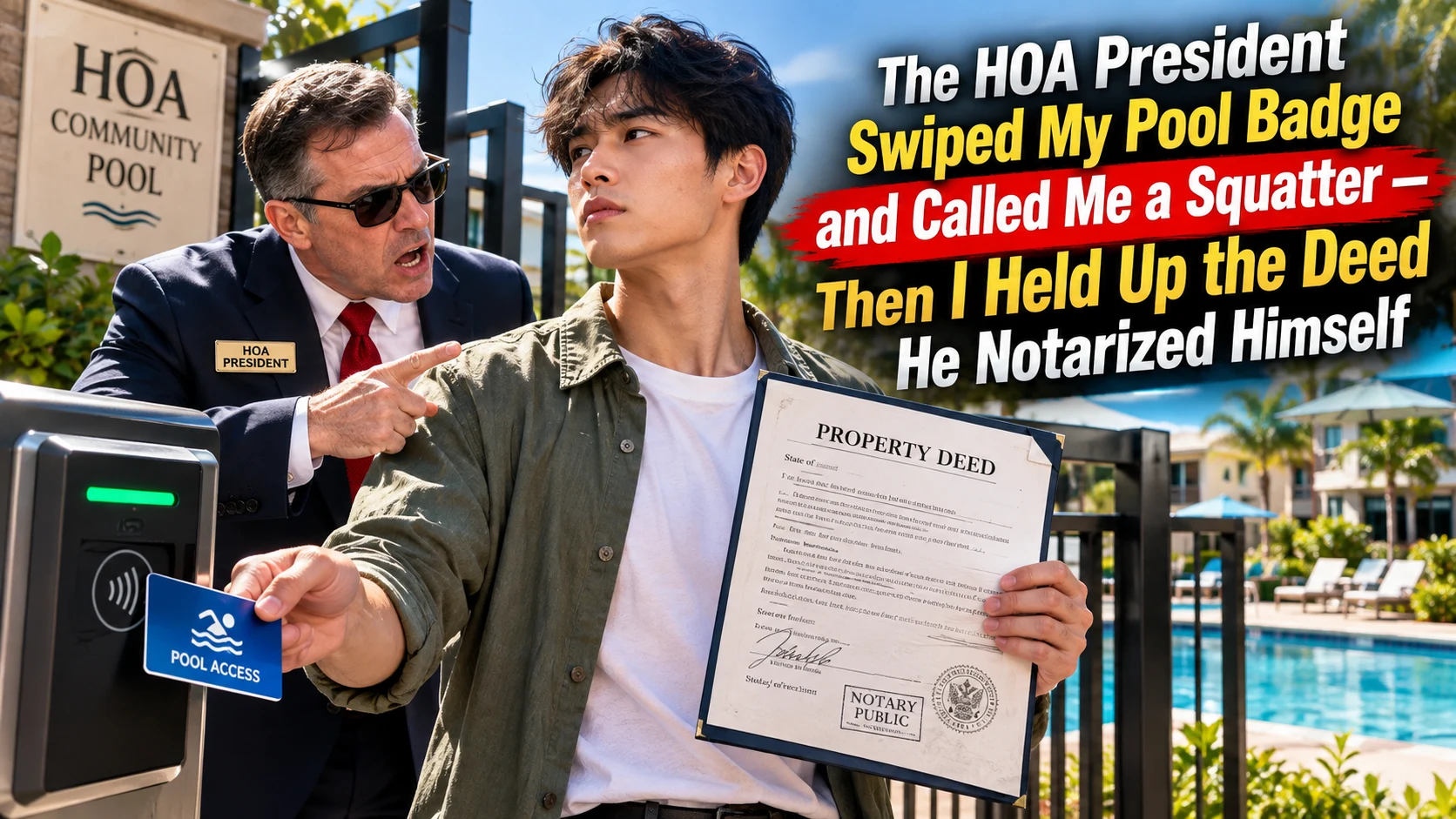
The HOA President Swiped My Pool Badge and Called Me a Squatter — Then I Held Up the Deed He Notarized Himself
Dale Brandt ripped my pool badge out of my hand in front of forty neighbors and told me squatters don't get to swim. My…
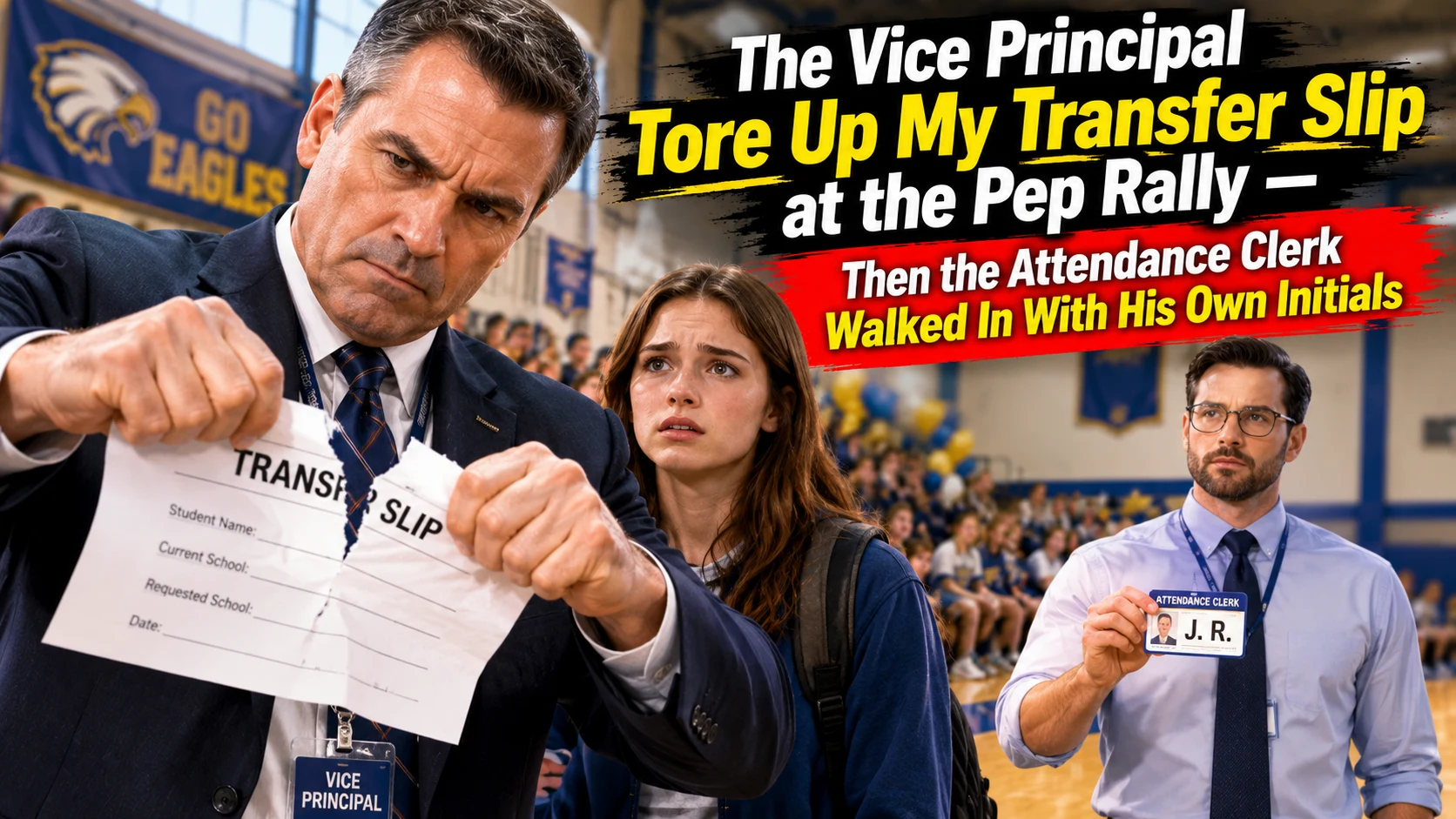
The Vice Principal Tore Up My Transfer Slip at the Pep Rally — Then the Attendance Clerk Walked In With His Own Initials
Coleman Pruitt tore my transfer slip in half at the pep rally, held the pieces above my head, and told eleven hundred people I…
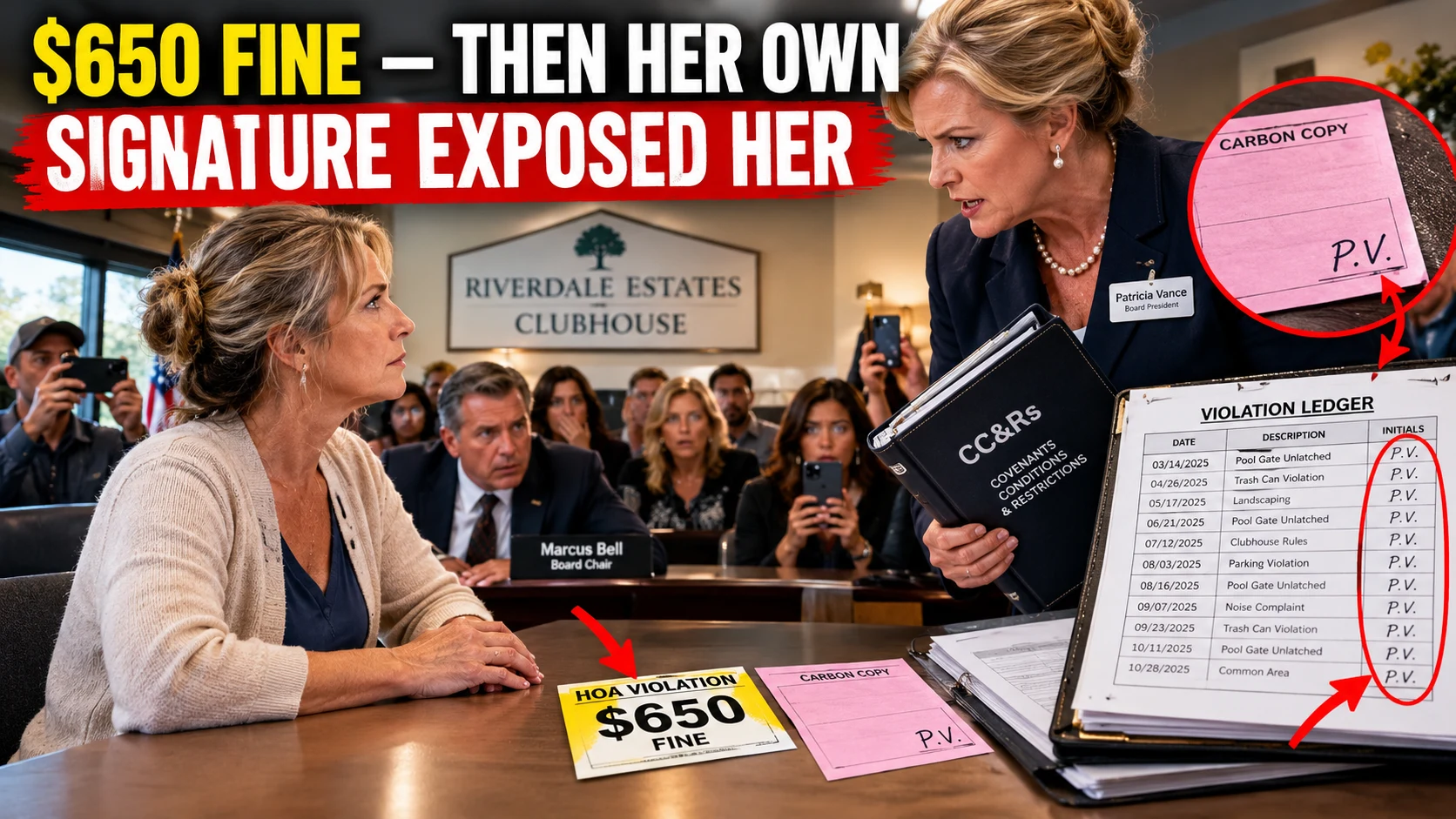
The HOA President Fined Me $650 for a Pool Gate I Never Touched — Then I Held Up the Pink Carbon Copy With Her Own Initials on It
"You left the pool gate unlatched again," Patricia Vance said, sliding the $650 violation sticker across the folding table, "and this time the board…
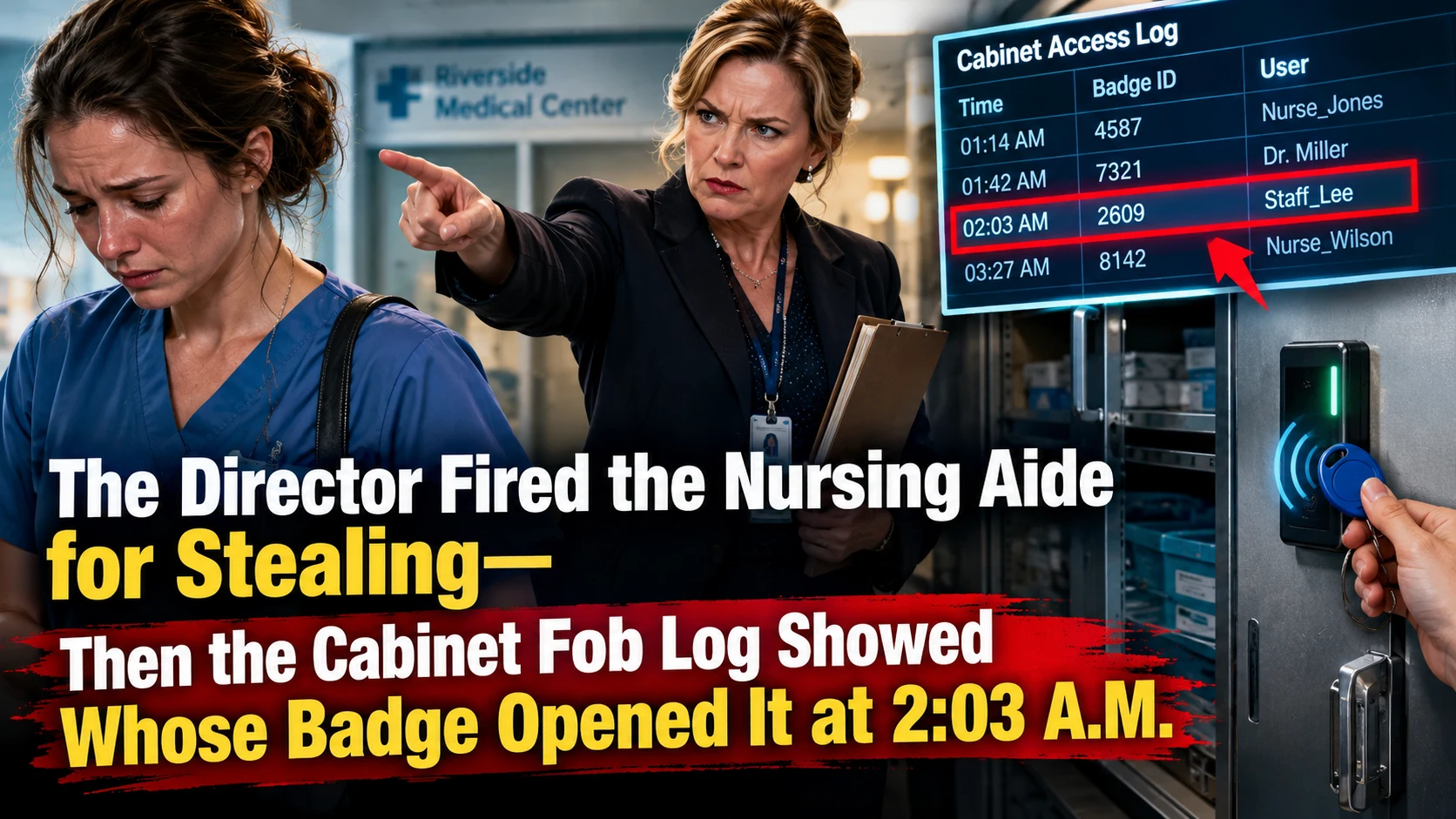
The Director Fired the Nursing Aide for Stealing—Then the Cabinet Fob Log Showed Whose Badge Opened It at 2:03 A.M.
The director's palm cracked down on the medication-room counter while the pill tray was still in my hands. "You took from the cart at…
The HOA President Fined Me $650 for a Pool Gate — Then the Log Showed Her Own Fob at 2 A.M.
The violation sticker landed on the folding table in front of me dated April 12 — the night I was three states away at…