Chapter 2 : "Frank," he said. "Hey. Frank."
Story: She Shamed Me for a Junkyard Yard — My Doorbell Cam Caught Who Really Dumped It
I stopped by my sedan. My hands were still cold from the room. I could feel my own heartbeat in my jaw.
"Did you — I mean —" Marcus was forty-four, a mortgage broker, one of the younger guys on the street, the kind of neighbor who waved but never stopped to talk. In the meeting he'd sat behind me the whole time and I'd felt his knee jiggling the back of my chair. "Did you really have a camera on it the whole time?"
"I don't know yet," I said. That was the truth. "I have to get home and check."
"You should check now."
"I'm going to."
He stood there another second. Then he said, quietly, in a different voice, "She told me last week she had evidence. She showed me the photo in her driveway. She said you'd stopped caring after Adaeze. She said —" He stopped.
"She said what."
"She said you couldn't be reasoned with." He looked down at his phone, then at me. "I'm sorry, man. I sat through the whole thing and I didn't say anything. I should have."
I looked at him for a beat. He was the kind of man who would always be sorry after, and I've never been able to do much with that.
"Alright," I said, and got in the car.
The drive home was nine minutes. Our street is a loop — Willow Bend Court curving off Marsh Road — and the houses sit in lazy rows along a strip of old oaks. The waterfront lots, like mine, back onto the retention pond that the sales brochures in 2004 called "the lake." Mine is the second to last. Brenda's is four doors up on the curve, on the interior side, no water view. That mattered, and I'd known it mattered for a while, but I hadn't let myself think the thought all the way through.
I pulled into my driveway at 8:11. The porch light was off. I hadn't left it on.
The junk was still on my lawn, six feet off the driveway, a dark shape in the headlights. Two weeks of cut branches going gray at the tips. The fender leaning against the mailbox. And beyond it, in the side yard, under a tarp, the truck.
I sat in the car with the engine off and looked at it for a while.
Then I went in, hung up my jacket, put on the kitchen light, and opened the laptop.
The camera app had been on Adaeze's phone, and then on mine, and I hadn't opened it once since March. It was still logged in. Two years of recordings, on a rolling cloud plan — thirty days of storage, ten dollars a month, auto-charged to a card I had never once thought about.
I sat down at the kitchen table with my reading glasses and clicked through.
I want to tell you what I felt, because people have asked. They expect rage. They expect a lightning strike. What I actually felt was very small and very quiet. It was the feeling of a man who has spent two months apologizing to a neighborhood for having a yard inside a widow's fog, who has stood under a woman's hand on his forearm and been told by his own insurance agent to "let the yard go, Frank," now realizing, with total clarity, that he had been in a story someone else wrote.
The clips were indexed by date. February, March, April, May, June — blank after March 14, because I'd unplugged the camera after the funeral, and then plugged it back in when Norma Whitaker told me there'd been a package theft on the loop. August. September. October.
October 8, 2:03 AM.
I clicked it.
The footage was grainy but it wasn't ambiguous. Night vision, green-gray, my own porch rail cutting the frame on the left, my own steps in the bottom third. And in the top third, at the edge of the driveway, a truck.
A tow truck. Forward-tilted boom, a wrecker body with the tailgate down, green cab with white letters on the door.
I leaned in until my reading glasses touched the screen.
The truck backed onto the lawn — the clip was thirty-eight seconds long and I watched a man do it in reverse, slow and careful, like a man who had done a hundred tow jobs in his life and knew exactly how to place a load. The boom swung. Branches came off the bed in a bundle and hit the grass. Then a fender. Then the drum. The whole thing took maybe twenty seconds, and the man hopped down out of the cab at the end and stood on my lawn in the porch-light wash with his hands on his hips, not hurrying, looking at the pile, checking it.
He wore a green work shirt and a green cap with a white logo. He stood there maybe six seconds. The camera caught him in profile.
The plate on the truck was legible. NC plate, four letters three numbers. The side of the cab said A-1 TOWING, arched over the wheel well in white vinyl.
And the timestamp in the corner read 10/08/2024 02:03:47.
I watched it four times.
The fifth time, I paused on the man's face in profile under the porch light, and I sat back.
I knew the profile. I'd known it for nine years, from every Fourth of July block party and every Labor Day cookout and every single board meeting where he'd come in as "Brenda's brother, the one with the tow trucks" and helped her carry the folding tables.
Dave Whitfield.
I sat at the kitchen table for a long time with my hands flat on either side of the laptop, the way I'd sat in the meeting, and the kitchen clock moved from 8:40 to 9:12 to 9:50 while I thought about a hundred small things at once.
Brenda's brother ran a tow service. Brenda had ordered a tow. Brenda had photographed my lawn the morning after the dump. Brenda had spent two weeks building a paper trail — warnings, abatement notices, a certified letter I hadn't signed for, because I'd been at the cemetery that day.
And the two families "looking at the Halloran house."
The Halloran house is the one between mine and the pond. It belonged to the Hallorans for twenty years and went on the market in August, and I'd heard from Norma — who hears things because she's the one person in the neighborhood nobody tries to hide things from — that the buyer was a developer from the county seat who builds four-house infill communities. Four narrow houses on one lot. And what he'd need, to build four houses on the Halloran lot, was one more lot for the access drive.
Mine.
I lifted my phone.
Then I put it down again, because my hands were shaking and I wanted to be calm when I did the next thing, and being calm took me a while.
Advertisement
All 8 chapters
- 1Brenda Whitfield's palm came down flat on the printed photograph, and the sound cracked through the clubhouse like a gavel. The photo was eight by ten, glossy, and brutal: my front lawn at seven in the morning, two weeks ago. Cut branches
- 2"Frank," he said. "Hey. Frank."
- 3The next morning, at 7:40, I took the SD card out of the camera, put the files on a thumb drive, put the thumb drive in a Ziploc bag, and put the Ziploc bag in the pocket of my jacket next to my wallet. I considered what else I might need
- 4She was in her late thirties, thin, quick, in a gray suit that made her look like she'd been in court all morning, which she had. She listened to me for eleven minutes without interrupting, and when I finished she said, "Give me the thumb
- 5"I heard what you told Brenda at the end of the meeting." Ruth is fifty-two and works as a legal assistant at a firm downtown and has been treasurer of the HOA for four years, and she is not a bad person, which is the whole problem with t
- 6The room had changed since the last meeting. That was the first thing I noticed. Same clubhouse, same U-shaped tables, same cookie tray, same harsh light. But the folding chairs were fuller — twenty-three, by my count, more than the last
- 7I met Alice Pham at the code enforcement office at 8:30 with the thumb drive and a printed copy of Ruth's scanned ledger pages and a two-page typed statement I had written the night before in the kitchen, and a code officer named Reggie P
- 8The county's nuisance investigation closed in December, and I have the letter in a file in my kitchen in a manila folder next to Adaeze's tax records. It says, in two paragraphs of dense legal prose, that the code enforcement division fou
You may also like

My Uncle Slapped Me at the Country Club and Called Me a Thief — But I Was Already Holding the Chit He Signed
My uncle's palm cracked across my cheek at the country-club lunch table and he shouted that I had stolen a member number that never…
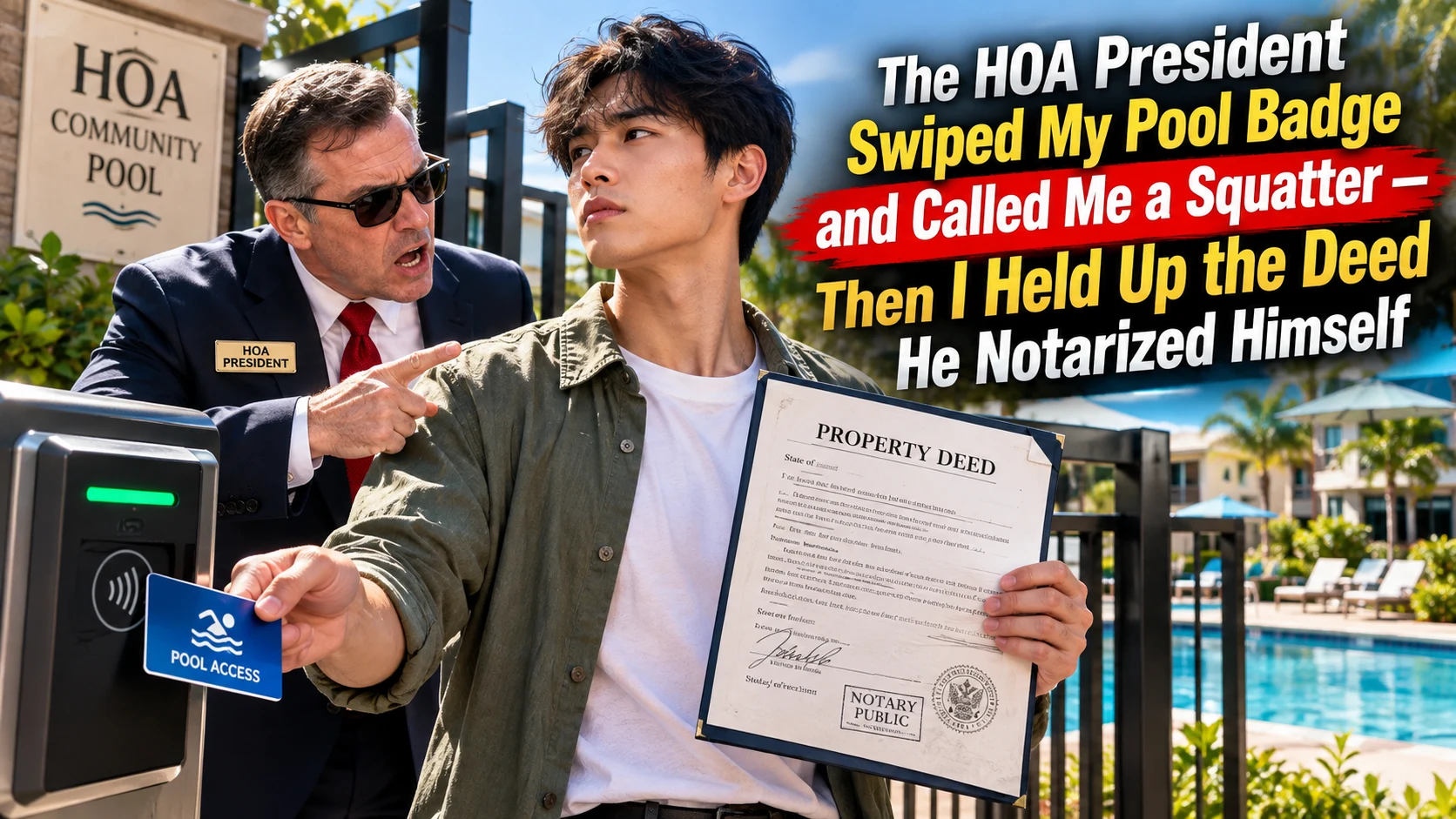
The HOA President Swiped My Pool Badge and Called Me a Squatter — Then I Held Up the Deed He Notarized Himself
Dale Brandt ripped my pool badge out of my hand in front of forty neighbors and told me squatters don't get to swim. My…
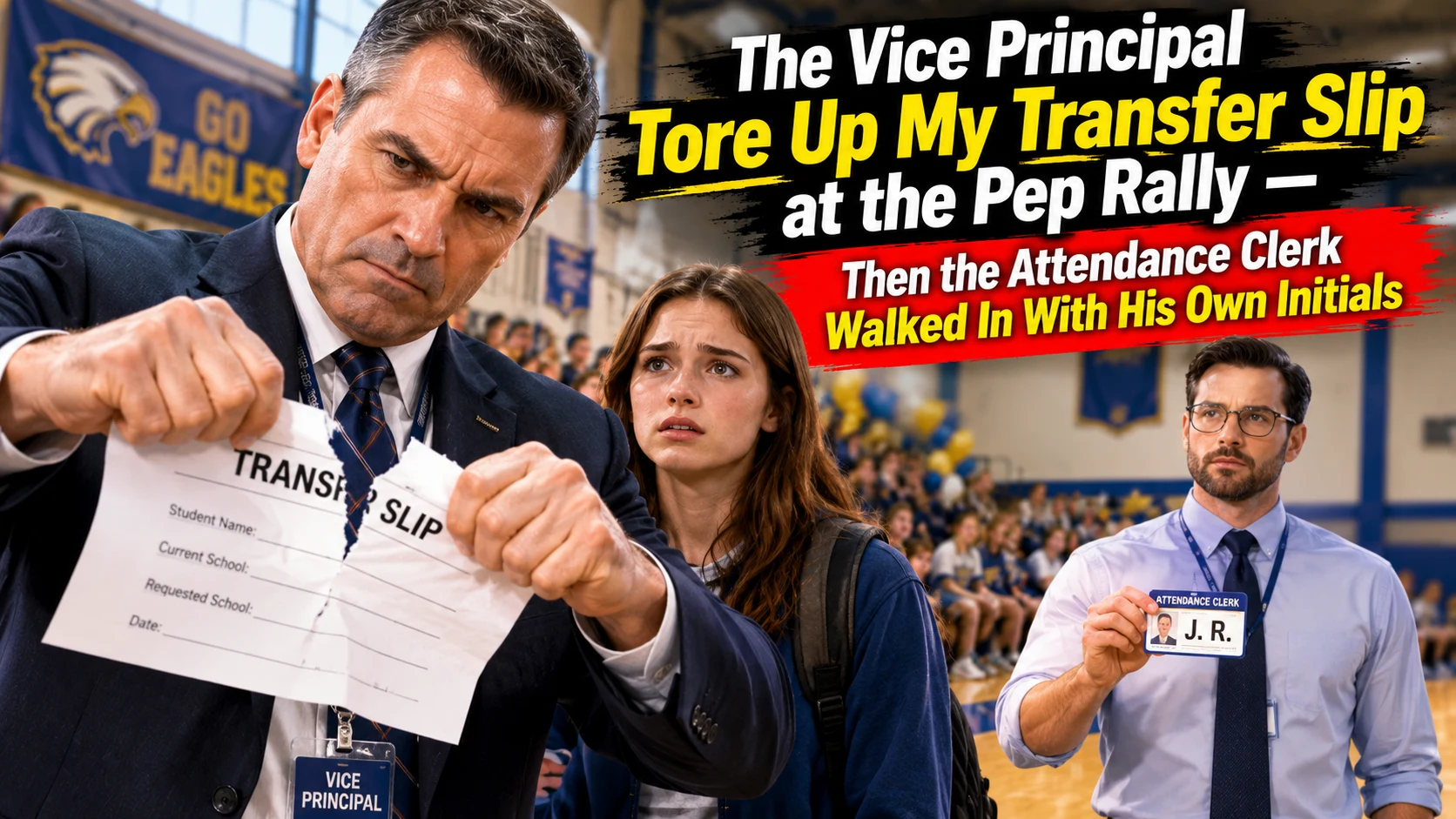
The Vice Principal Tore Up My Transfer Slip at the Pep Rally — Then the Attendance Clerk Walked In With His Own Initials
Coleman Pruitt tore my transfer slip in half at the pep rally, held the pieces above my head, and told eleven hundred people I…
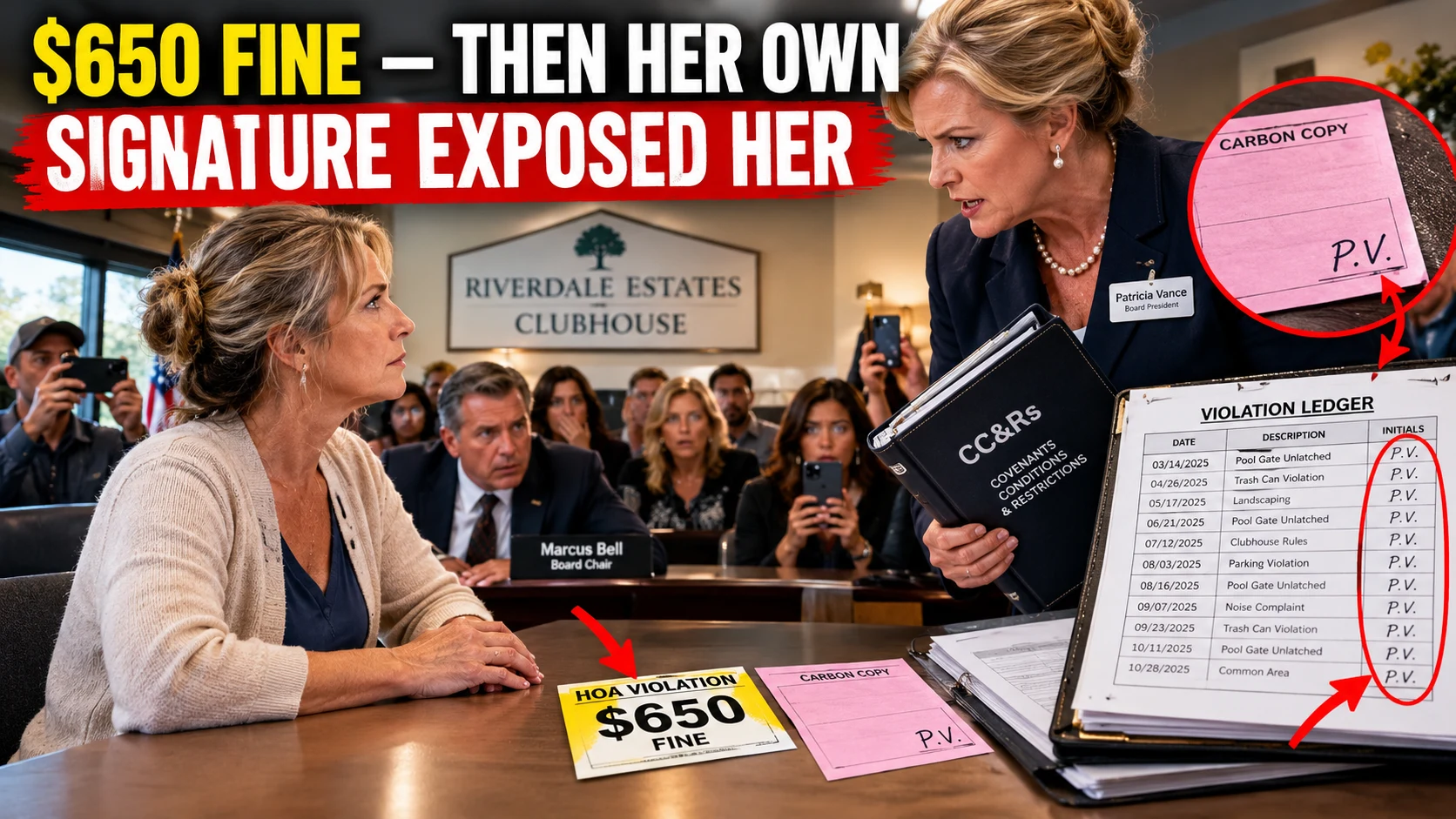
The HOA President Fined Me $650 for a Pool Gate I Never Touched — Then I Held Up the Pink Carbon Copy With Her Own Initials on It
"You left the pool gate unlatched again," Patricia Vance said, sliding the $650 violation sticker across the folding table, "and this time the board…
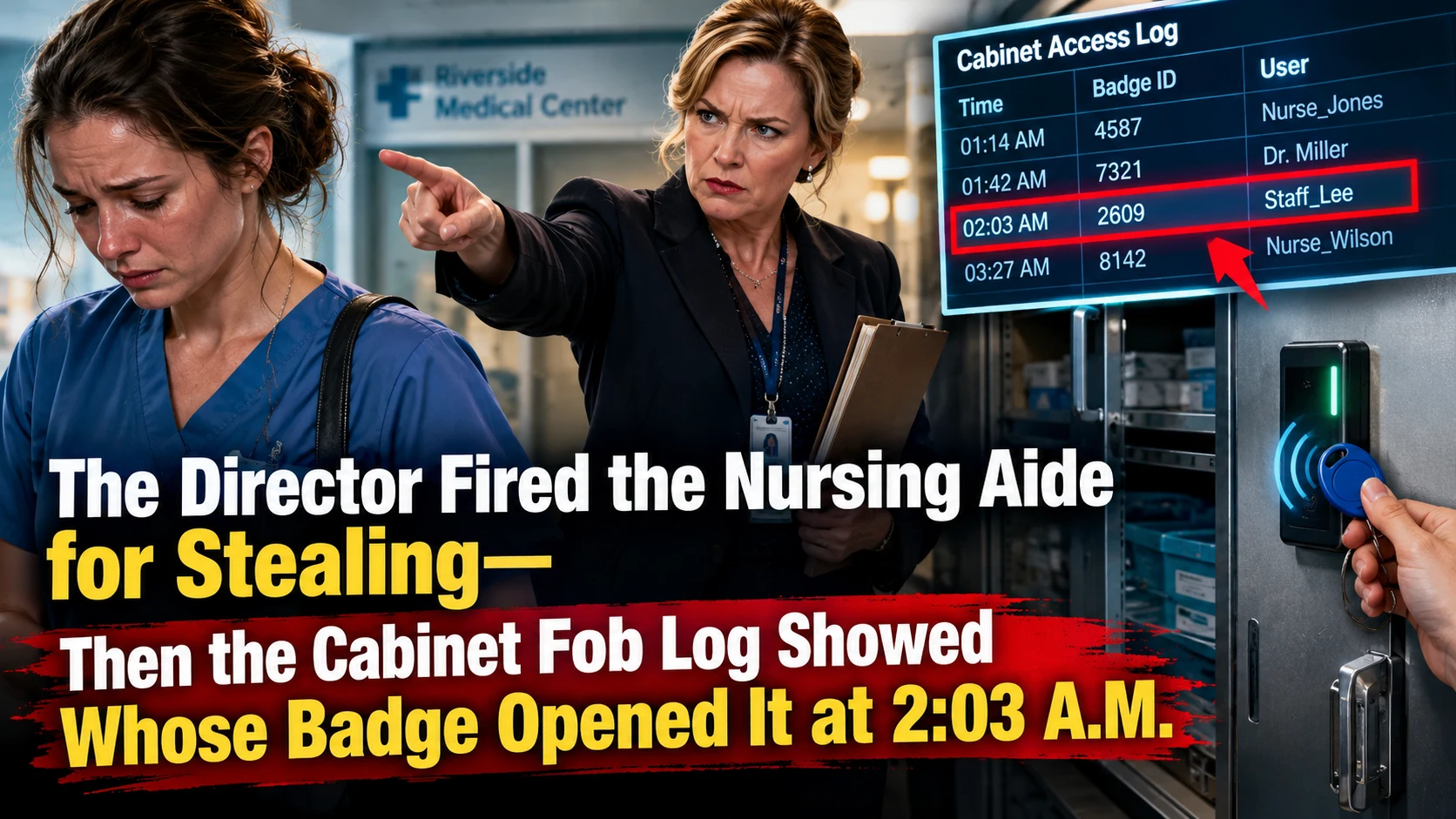
The Director Fired the Nursing Aide for Stealing—Then the Cabinet Fob Log Showed Whose Badge Opened It at 2:03 A.M.
The director's palm cracked down on the medication-room counter while the pill tray was still in my hands. "You took from the cart at…
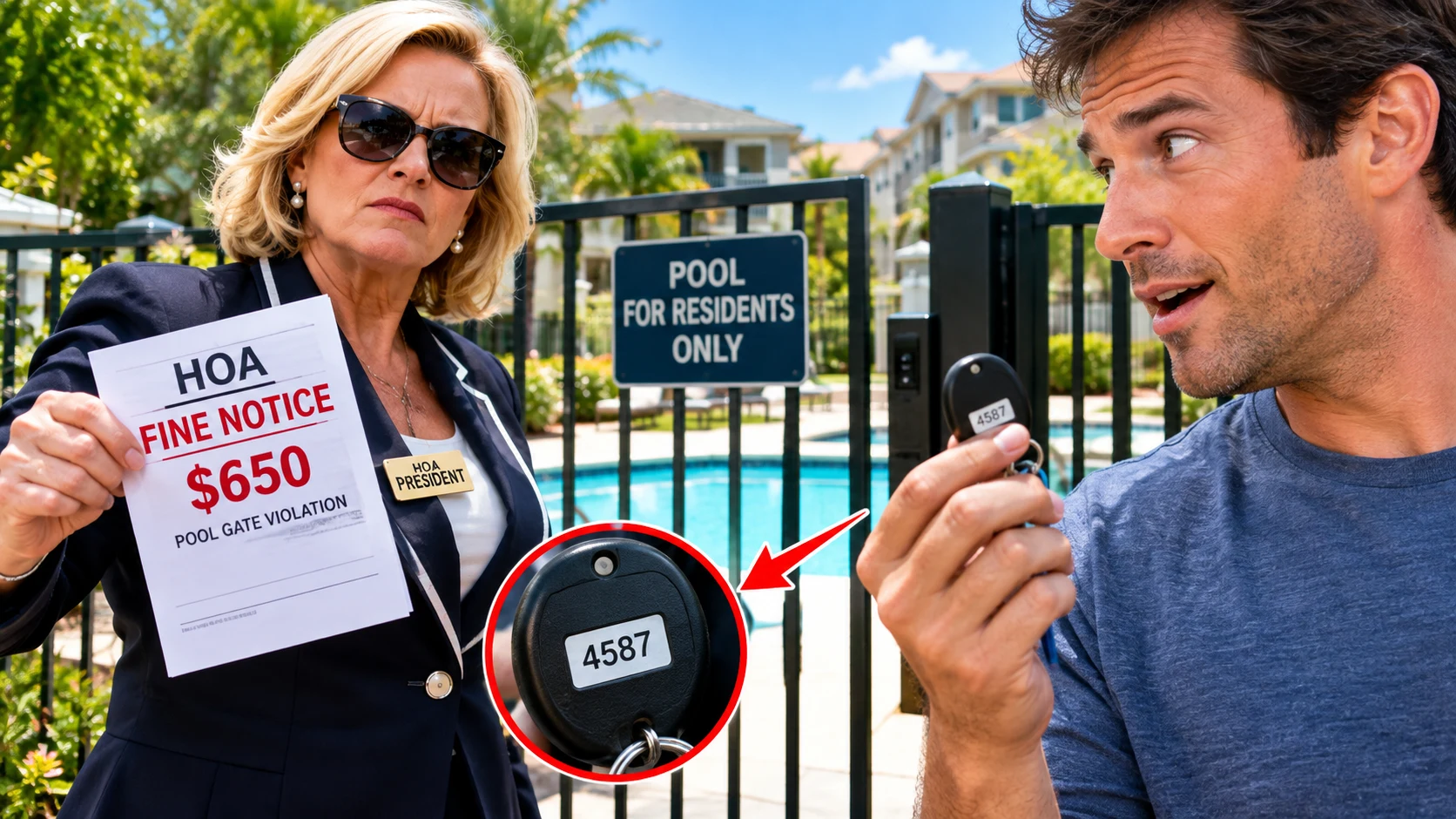
The HOA President Fined Me $650 for a Pool Gate — Then the Log Showed Her Own Fob at 2 A.M.
The violation sticker landed on the folding table in front of me dated April 12 — the night I was three states away at…