Chapter 1 : One second the pool deck was a wall of noise — cicadas, a radio playing something with too much bass, kids screaming through the chain-link, the flat slap of wet feet on hot concrete — and the next second all of it went thin, like somebod
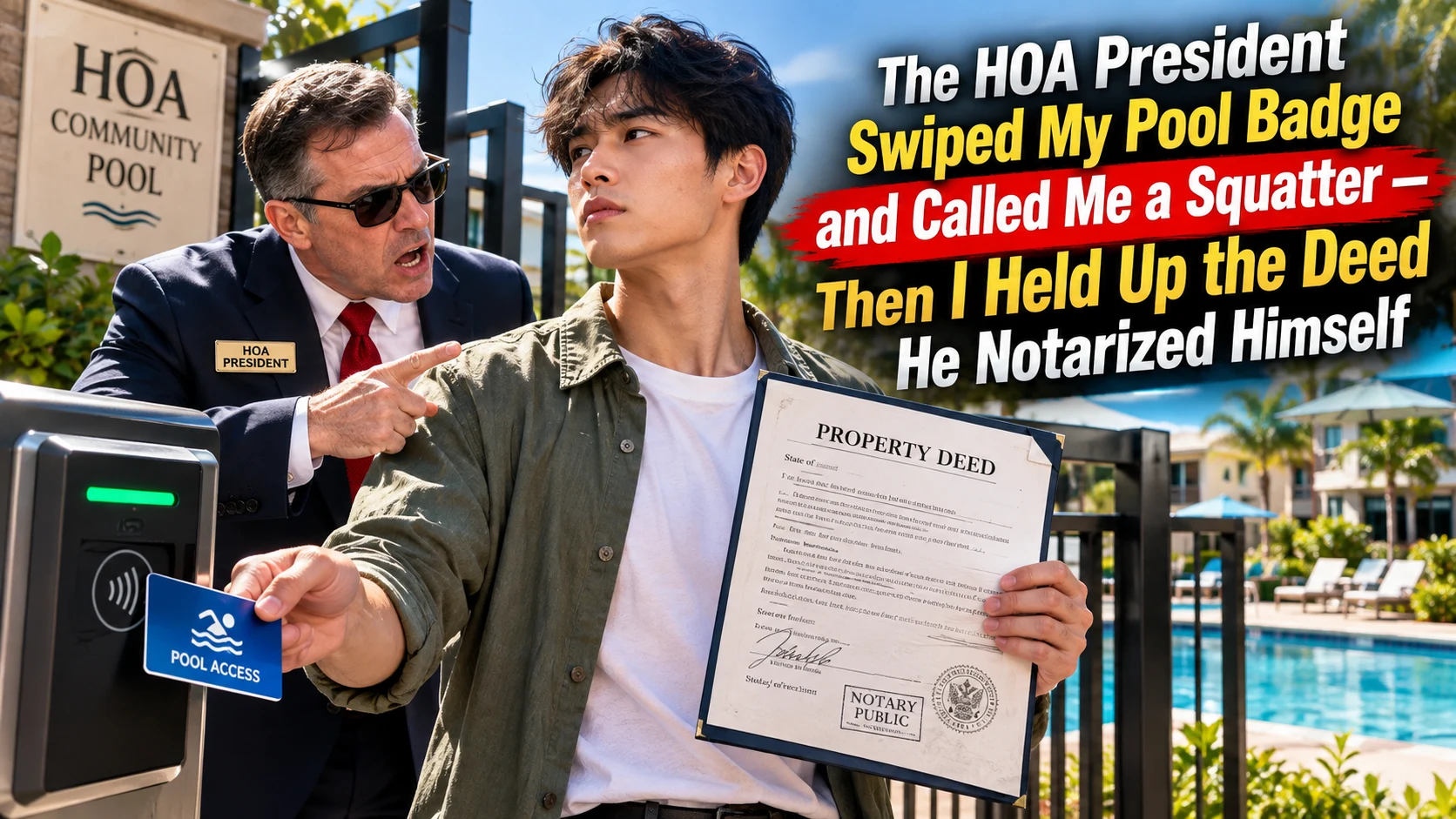
Dale Brandt ripped my pool badge out of my hand in front of forty neighbors and told me squatters don't get to swim. My mother's deed was folded in my back pocket — with his own notary stamp on the last page. I've lived in…
Ramona Vega felt the sting before she understood it. A bright, flat pain across her right cheek, hot and then hotter, spreading up into her eye socket. Her sunglasses were gone. She heard them skitter across the concrete somewhere to her left and stop.
Her head had turned on its own. She hadn't told it to. When it came back level, Dale Brandt was standing over her the way he'd been standing over her for the last four minutes, except now his right hand was at his own hip, fingers spread, and his mouth was open.
"SQUATTERS don't get to swim in MY pool," he said.
Not a question. Not even really aimed at her. Aimed at the deck. At the forty-odd neighbors in swimsuits and cover-ups and flip-flops who had all, every one of them, stopped moving.
Ramona sat very still on the folding chair she had pulled out of the rack herself eleven minutes earlier. Her tote bag was at her feet. The strap was still looped around her left wrist. Her right hand was open on her thigh, exactly where it had been when he swung.
She did not touch her face. She had learned a long time ago that touching your face tells a crowd how much it hurt.
Two feet behind Dale, Delia Pruitt stood frozen mid-sip of a canned seltzer, sunglasses pushed up on her head, phone already up in her right hand. The phone was not pointed at the pool. It was pointed at Ramona.
Dale's left arm was clamped across the metal clipboard and the fine ledger, holding both against his ribs like a man carrying groceries in the rain. His chest was out. His jaw was set. He was waiting for her to do the thing they always did — cry, or leave, or say *I'm sorry, I didn't know*, and then the deck could go back to being a Saturday.
Ramona did none of those things.
She looked at the badge on the concrete. It had slid past the drain grate and stopped flat, the plastic lanyard trailing behind it like a dead snake. A little girl in pink floaties — maybe six, maybe seven — had walked three steps away from her mother to watch it slide, and now she was standing there with her mouth open, staring at the badge, then at Ramona's face, then back at the badge.
The girl's mother pulled her back by the wrist. Nobody said anything.
"You hear me?" Dale said. He shifted the clipboard up higher, like a professor about to start a lecture. "You want to tell these people why you're on my deck?"
"I've been on this deck since before you were president," Ramona said. Her voice came out level. She was surprised by it. Her cheek was throbbing in time with her heartbeat, but her voice was fine.
"Fourteen years," Dale said, turning to the deck, playing to it. "Fourteen years and not one payment receipt. Not one. You know how many people in this subdivision pay their dues every quarter? Every one. Every single one. Except one."
"Unit fourteen," somebody said from the shade of the clubhouse awning. Ramona didn't turn to see who.
"Unit fourteen," Dale agreed. "Fourteen years of it. She's not even a member. She's a — " He stopped himself, straightened his polo, and said the word anyway, quieter, which somehow made it worse. "She's a squatter."
The deck made a sound. Not a gasp. That would be too generous. It was a low, soft noise, the sound of forty people deciding, at the same time, not to be the one who disagreed.
Ramona looked past Dale to the girl with floaties. Then to the kid sitting on the edge of the pool with his legs in the water, who had been about to jump in and hadn't. Then to the woman on the lounge chair at the far end, mid-fifties, sun hat, paperback face-down on her chest — Ramona could not remember her name, but she had waved to her every morning for years, and now that woman was studying her paperback like it was a legal document.
Fourteen years. Ramona had moved back into her mother's house the week after the funeral, when the estate lawyer handed her a folder and said *this is all of it*. She had been paying the rent-to-own line every month since, automatic withdrawal, same date, same amount her mother had set up in 1994. She had replaced the water heater. She had painted the trim. She had fixed the fence that Dale Brandt himself had complained about in 2019, before he'd ever been president, back when he was just the guy on the corner who kept his trash cans out an extra day.
She knew every crack in this walkway by heart.
"You know what your mother did?" Dale said, dropping his voice now, going for the tender version. "Your mother came onto this board with a handshake deal. Handshake deal. No paperwork. My predecessor said yes because he felt sorry for her. And then she passed, God rest her, and you — " he jabbed the clipboard's edge at Ramona without touching her — "you just kept the handshake. That's not how a subdivision works. That's not how anything works."
"My mother died eight years ago," Ramona said.
"I know when your mother died, Ramona. I sent a ham."
The deck made that soft noise again.
Dale reached into his pocket and pulled out the fine ledger. It was a green three-ring binder, the kind used in offices that still used fax machines. He held it up.
"Two thousand four hundred dollars," he announced, to the deck, to the phone in Delia's hand, to the reading of it. "Three years of violations. Pool use without membership. Common-area misuse. Two notices for the fence. One for the parking situation." He flipped the ledger open and turned the page toward the crowd, holding it at arm's length like a preacher with a Bible. "You want to tell these people you're a member? Then you have a membership card. Do you have a membership card? Show the board."
Ramona did not answer. She was looking at the page.
The crowd was three feet away and they were looking at the page too, but they weren't reading it. They were reading Dale's face. He held the page for maybe four seconds, long enough for the gesture, not long enough for the details, and in those four seconds Ramona saw two things she had not seen before today.
The lot number at the top of the ledger page was 22-C.
Not Unit 14. Not 14-anything. 22-C. Her mother's old lot number — the lot number from before the subdivision replatted in '96, the number her mother had used on everything, on the tax card, on the water bill, on the little laminated tag she'd kept on her keyring until the ring wore through.
And in the bottom right corner of that same page, where the quarterly compliance signature block was, there was a small square of purple-blue ink. A stamp impression. She could only see the corner of it from where she sat, but she knew that shape. She'd seen it before, on a different document, in a different kitchen, eight years ago.
"One more word," Dale said, closing the ledger, "and I'll add five hundred to what you owe — and have that Corolla towed by Monday."
Ramona hadn't said one word yet.
The Corolla was parked in the visitor row by the tennis courts, twenty feet from where they were standing, silver, 2011, with the Toyota badge missing off the grille because it had come off in a car wash in 2019 and she had never bothered to replace it. Dale could see it from here. He had driven past it every morning for fourteen years. Now it was a prop in his lecture.
"Your mother never finished the paperwork," he said.
There it was.
Ramona had been waiting for that sentence for three years, ever since the first violation notice showed up in her mailbox with no explanation and no signature. She had been waiting for it the way you wait for a storm you can already smell.
*Your mother never finished the paperwork.*
Her mother had finished the paperwork six months before she died. On a Tuesday. In the kitchen on Dale Street, at the yellow Formica table with the coffee ring on it that Ramona still hadn't scrubbed off because it was her mother's coffee ring, in the room where Ramona had sat with a notary she had known since she was a teenager and watched her mother sign her own name at the bottom of a deed.
Ramona reached down.
Her right hand wasn't shaking. She was aware of that. It felt important. She reached past the tote strap on her wrist, into the canvas bag, past the house key on its brass ring and the county recorder's receipt stub from 2016 folded into the side pocket, and her fingers found the page. It was soft at the corners. Worn, like fabric. It smelled faintly of sunscreen and the inside of a car. She had carried it in that bag for eight years because she had been raised not to start fights, and because she had believed — right up until about four minutes ago — that there was no fight to start.
Dale was still talking. Something about the towing company, something about a hearing, something about the value of everybody's homes.
Ramona stood up.
She didn't rush. She stood the way her mother had stood, slow, one hand on the back of the chair to steady it, and she stepped out from behind the folding chair into the middle of the walkway, in the open, where the sun hit her directly and everyone could see her.
Dale stopped talking.
Ramona unfolded the page. Once. Twice. The paper crackled, soft. She held it at chest height, both hands, and turned it so the lower third faced the deck.
She didn't read it. She didn't need to. She had read it about four hundred times.
"This stamp," she said. "Is it yours?"
Dale leaned in.
He leaned in before he could stop himself, the way people lean in to a phone screen when they're being shown something they don't want to believe. His eyes went to the bottom right corner of the page, to the small square of purple-blue ink, and for one second — one single second, before his face moved — he looked like a man who had just heard his own voice on a recording he didn't remember making.
"That's my notary seal," he said.
The deck had gone completely quiet. Even the radio had been switched off by somebody. The cicadas kept going, indifferent.
Ramona turned the deed a little further toward the crowd.
"Twenty-two-C," she said, loud enough for the back of the deck. "That's the parcel number on the top of this page. Same number on the top of your ledger, Dale."
Dale's chin dropped. Two inches. Maybe less. His right hand came up off the clipboard and went to his own breast pocket, and his fingers rested on the flap like he was trying to remember whether his notary log was in there or at home in the desk drawer in the den.
"You signed my mother's deed eight years ago," Ramona said. "At her kitchen table. I was in the room." She lifted the page a notch higher. "You notarized the transfer of the common parcel to me. I own this lot."
Nobody moved.
The woman with the sun hat and the paperback let the book slide off her chest onto the ground and did not pick it up.
On the deck behind Ramona, the boy who had been about to jump into the pool climbed out of the water and stood on the concrete, dripping, staring.
Delia Pruitt's seltzer can came down two inches from her mouth. Her phone stayed up. Her eyes were on the paper. Her thumb was not moving, which meant the recording was still running, which meant in about nine minutes a two-minute version of this was going to hit a Facebook group with three hundred members and a Nextdoor thread with a thousand.
Ramona lowered the deed slowly, two inches, back to her lap, and held it there with both hands, and looked at Dale.
She did not smile.
She had thought, over the years, about what she would say if this moment ever came. She had rehearsed it in the car, in the shower, in the front-desk chair at the dental office when the 3 PM cancellation left her alone with the filing. She had imagined a speech. She had imagined the satisfaction.
What she actually felt, standing there in the white glare with her cheek still hot, was something much quieter and much colder: *there it is. Now it's everybody's problem, not mine.*
Dale's mouth opened. Closed. Opened again.
"I — " he said. "That — I'd have to look at the — "
"Take your time," Ramona said.
She sat back down on the folding chair, in the exact same place. She put the deed back in her tote, folded twice, exactly the way it had been. She reached down and picked her sunglasses off the concrete — one lens not cracked, thank God — and put them on.
The crowd was still frozen. Nobody had moved toward the pool. Nobody had moved toward their cars. Nobody had moved toward Dale, either.
And then, from the clubhouse door twenty feet behind them all, a voice — the pool desk clerk, a college kid named Marcus who worked the gate on Saturdays — said, clearly, into the silence:
"Mr. Brandt? Your notary log — it's in the clubhouse safe, right? I saw you put it in there Tuesday."
Dale's hand came away from his breast pocket and fell to his side.
The deck made that soft noise again. But this time, it was a different noise. This time it was the sound of forty people, at the same time, deciding.
Ramona sat with her hands folded on the tote in her lap, sunglasses on, cheek hot, and watched the first person — the woman with the sun hat — walk, in bare feet, across the hot concrete, all the way over to the folding chair next to Ramona's, and sit down without saying a word.
Advertisement
All 8 chapters
- 1One second the pool deck was a wall of noise — cicadas, a radio playing something with too much bass, kids screaming through the chain-link, the flat slap of wet feet on hot concrete — and the next second all of it went thin, like somebod
- 2The first thing that happened was that Marcus, the pool desk clerk, came out of the clubhouse with the clipboard that carried the membership roster for the season. He was nineteen, skinny, still in his school polo from a summer internship
- 3Ramona walked over at 4:45 in flip-flops and a clean gray t-shirt, with her tote on her shoulder and the deed in a gallon Ziploc bag because Delia had brought the peas and made her put a bag of them on her cheek, and the peas had left a w
- 4Dale's signature on the deed was not pretty. It slanted up to the right, the way signatures do when you're signing on the hood of a car or a counter you're not leaning on, and the "D" had a habit of losing its loop at the end. His "Brandt
- 5The earlier log was in the safe-deposit box that Dale Brandt kept at the Carthage Savings Bank on Main Street, box 441, and Ramona did not know that until Tuesday morning at 9:12 AM, when Sonya called her from the bank's parking lot.
- 6Ramona called at 8:30 Wednesday. Lane answered on the second ring.
- 7Ramona was on the second floor at 8:05 Thursday with the strip's legal description written on an index card, and she handed the card to the woman at the desk, and the woman typed it into the terminal, and looked at the screen, and looked
- 8"Yolanda says the box has been empty since Monday," Sonya said. "The log shows Dale was in there Monday at 9:07. Yolanda says she didn't see what he took out. She wasn't working the vault that day."
You may also like

My Uncle Slapped Me at the Country Club and Called Me a Thief — But I Was Already Holding the Chit He Signed
My uncle's palm cracked across my cheek at the country-club lunch table and he shouted that I had stolen a member number that never…
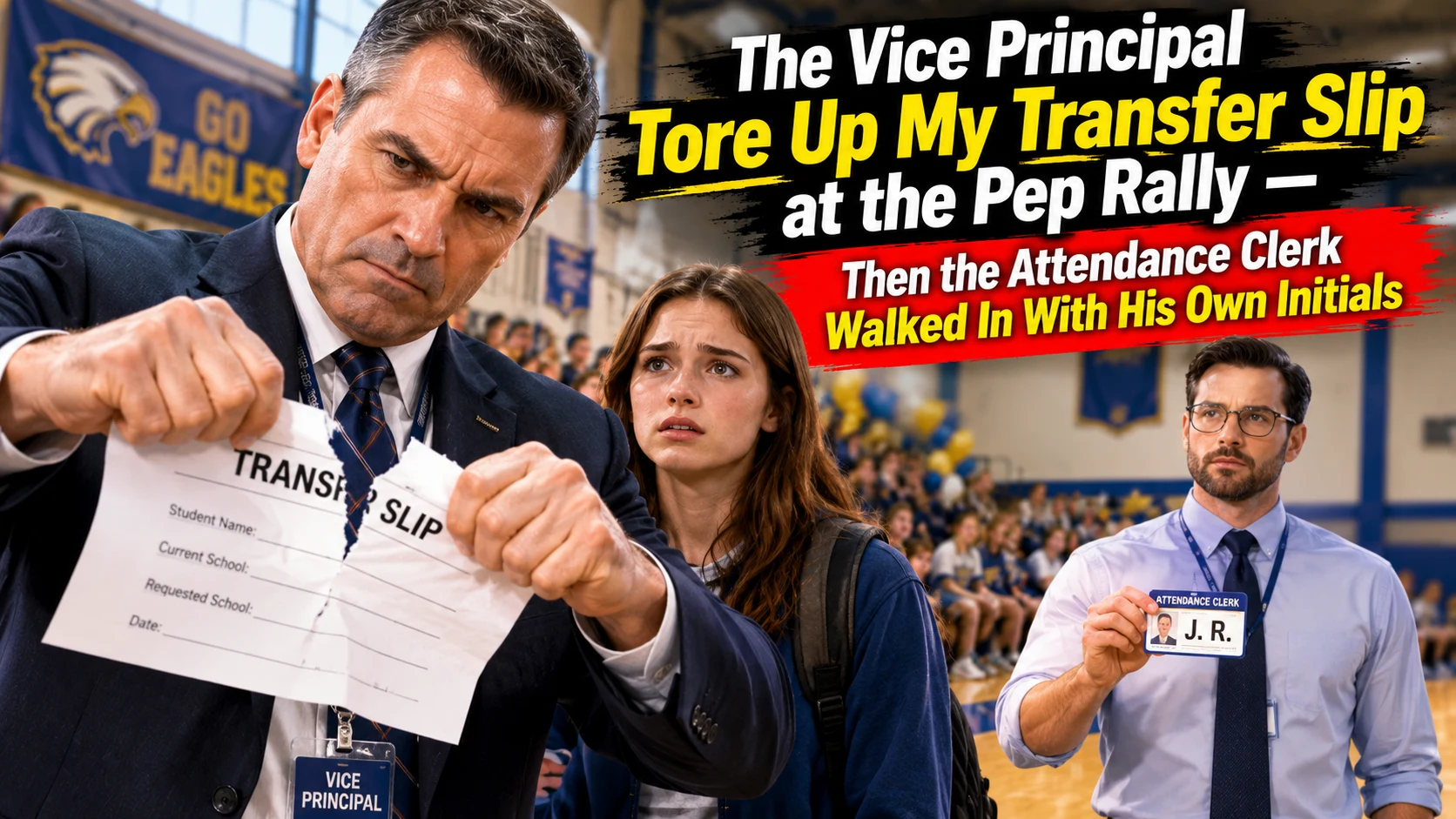
The Vice Principal Tore Up My Transfer Slip at the Pep Rally — Then the Attendance Clerk Walked In With His Own Initials
Coleman Pruitt tore my transfer slip in half at the pep rally, held the pieces above my head, and told eleven hundred people I…
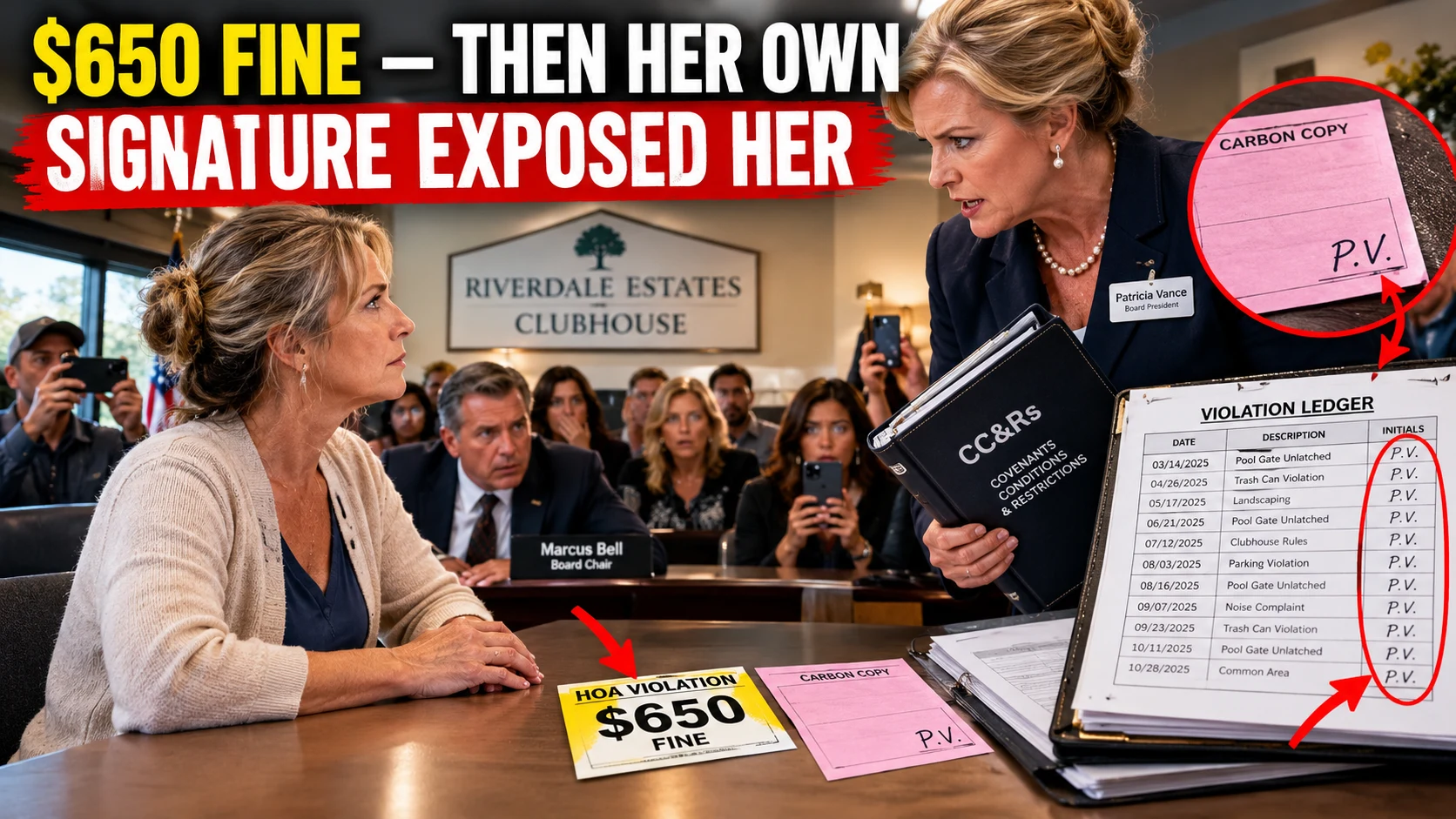
The HOA President Fined Me $650 for a Pool Gate I Never Touched — Then I Held Up the Pink Carbon Copy With Her Own Initials on It
"You left the pool gate unlatched again," Patricia Vance said, sliding the $650 violation sticker across the folding table, "and this time the board…
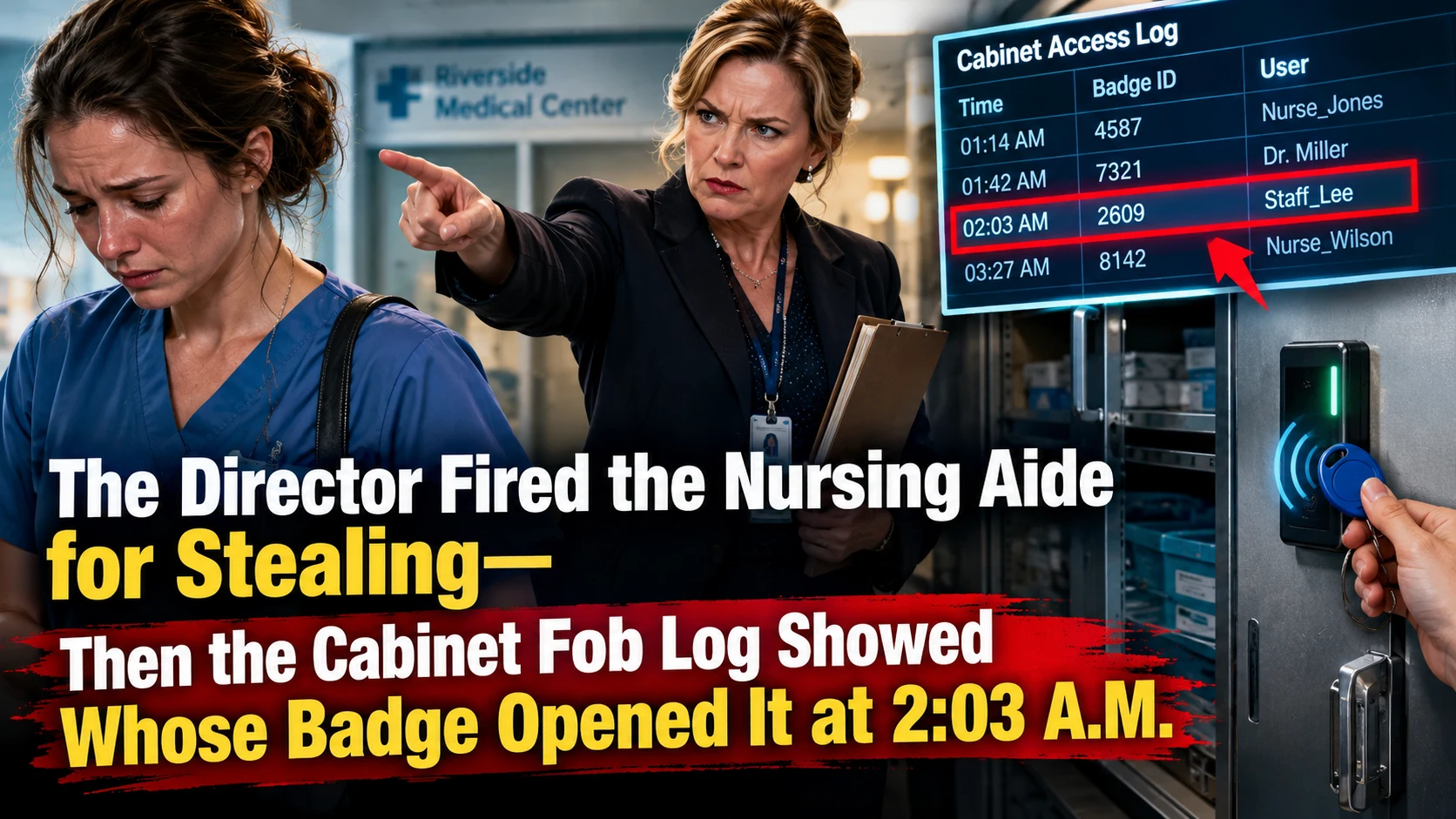
The Director Fired the Nursing Aide for Stealing—Then the Cabinet Fob Log Showed Whose Badge Opened It at 2:03 A.M.
The director's palm cracked down on the medication-room counter while the pill tray was still in my hands. "You took from the cart at…
The HOA President Fined Me $650 for a Pool Gate — Then the Log Showed Her Own Fob at 2 A.M.
The violation sticker landed on the folding table in front of me dated April 12 — the night I was three states away at…
She Shamed Me for a Junkyard Yard — My Doorbell Cam Caught Who Really Dumped It
"Your junkyard is why my property value dropped, Frank!" Brenda slammed the violation photo down on the table, and the whole clubhouse leaned in…